One Way Ticket

(Well keep going east till we’re home)

Transition day, air travel as a time machine 

We depart an easy-going inexpensive, wholly Muslim, island culture via a speedboat and an overnight air flight into an energized, multicultural, modern Asian urban situation. Leaving what maybe a very rare or at least hard to find environment, where tourists are scarce and locals are welcoming. Where there are no flatscreen TVs in rental rooms but where you need a smart phone to read a QR code in order to fill out the entry card data just to get into this country. A place where local populations eat tuna with, shall I say every meal, along with coconut. We have created our own lunches, buying crackers, bread, and peanut butter.

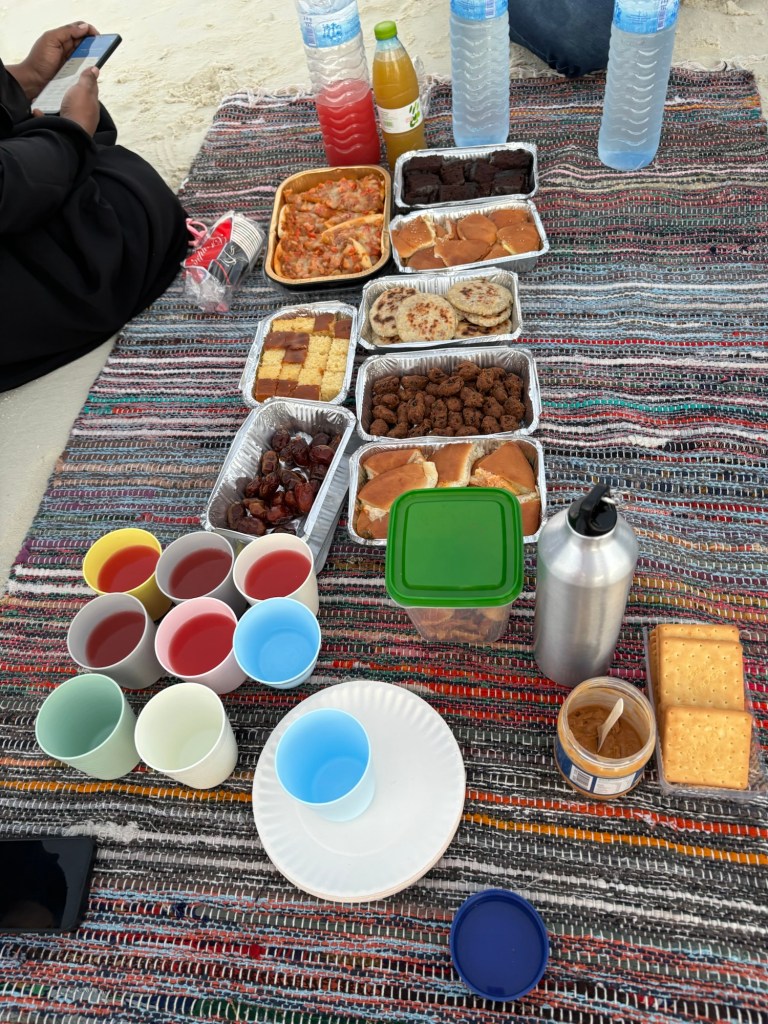
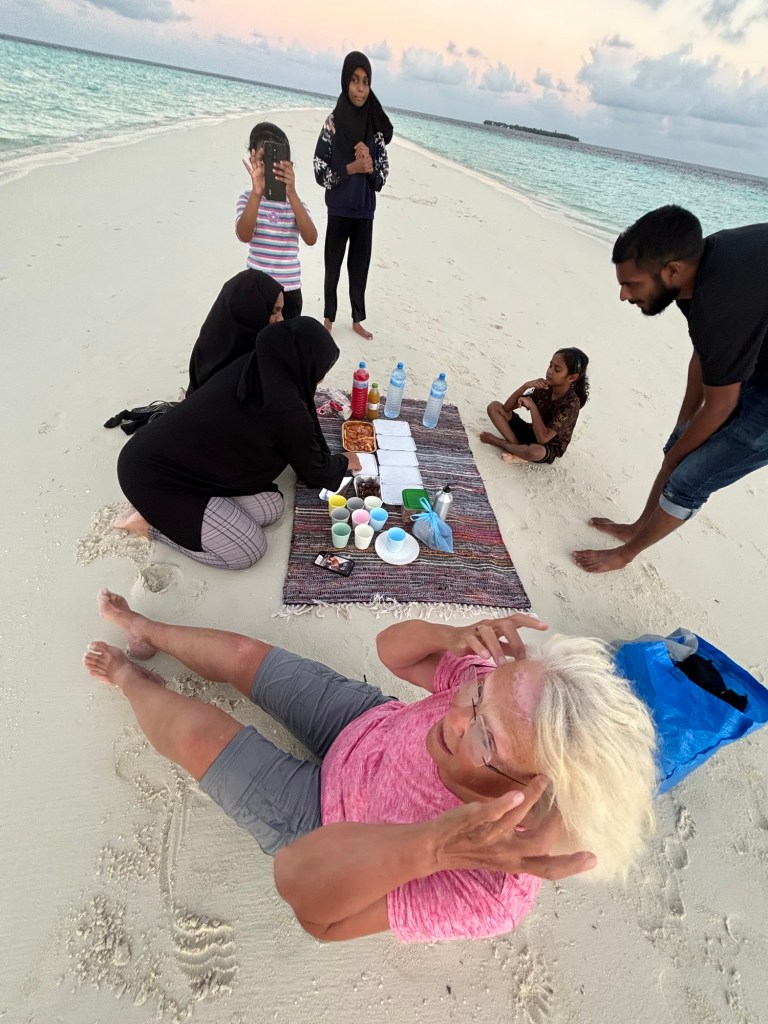
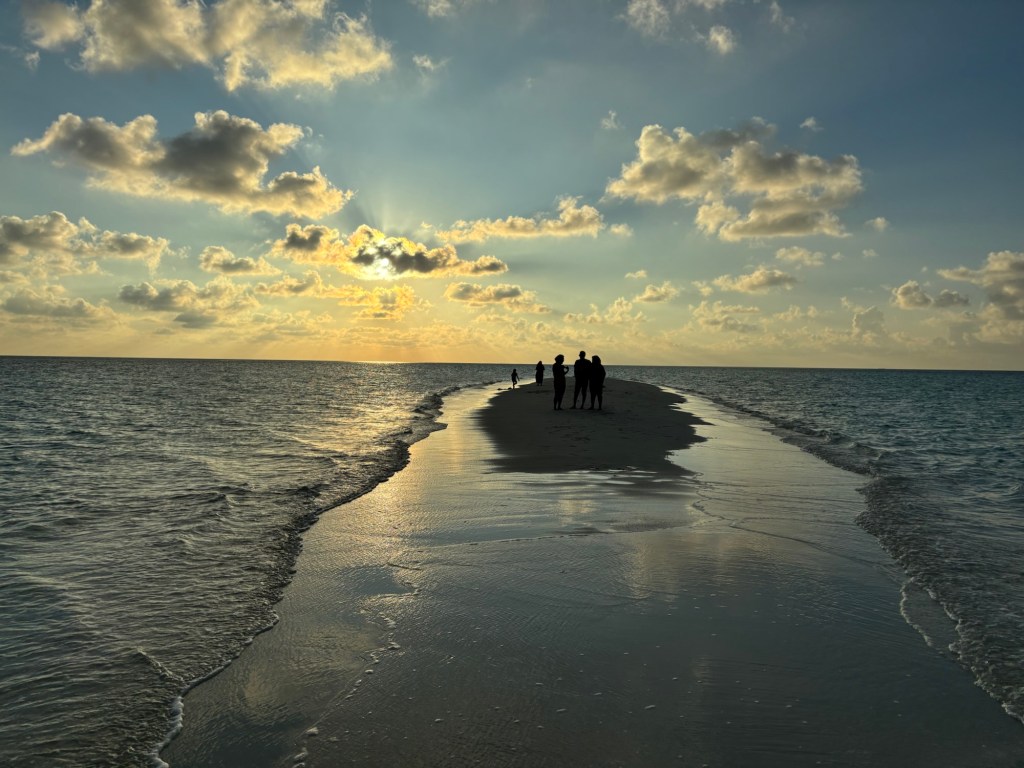
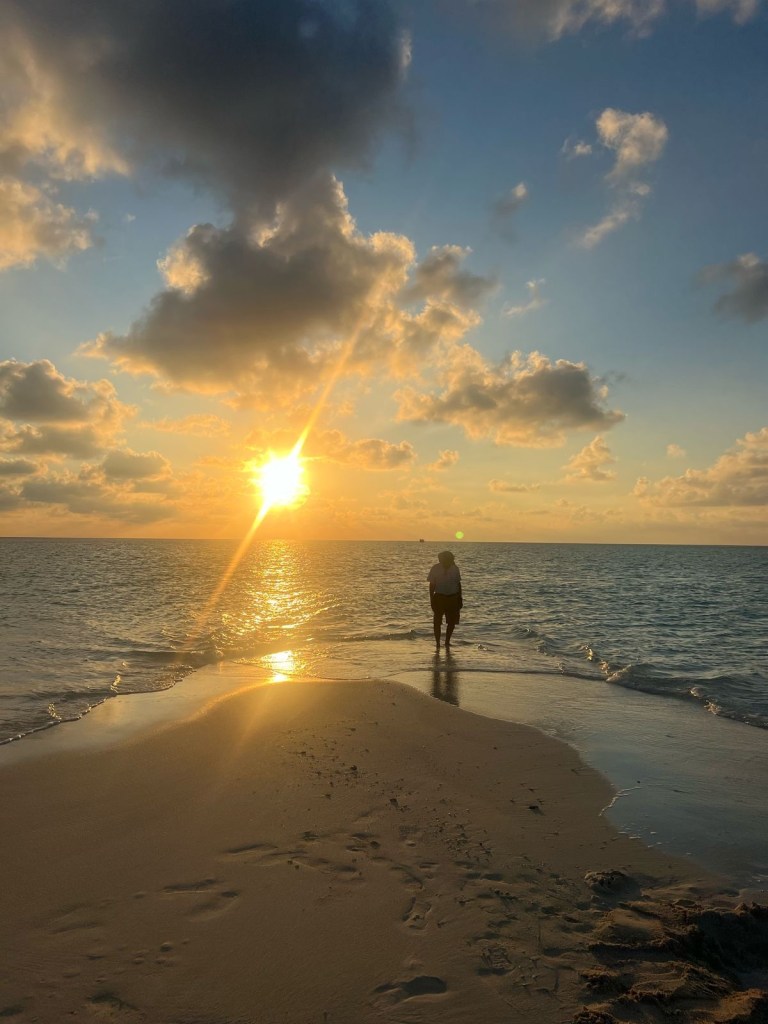
Being here during Ramadan, we have witnessed the local population observing the fasting, prayer times and rhythms of the shops closings and openings. After sundown, people eat snacks. We ate snacks with the family who invited us here. We met these people in Morocco in the Sahara riding camels. The snacks we shared were actually a picnic on a low tide sandbank. Our time here in the Maldives has been a learning experience on beautiful islands shared with generous people.

These Maldive experiences came about because one of our traveling objectives is to be open to unexpected encounters. Some people may think it is risky doing this and maybe it is, but being out here in the world it has been our experience that as Louis Armstrong sang in his song, it’s a wonderful world That “people shaking hands, saying how do you do, they’re really saying, I love you.” When we travel from the US, people say to us “be safe.” Our fear is that precautions may keep us from encounters with caring, genuine, loving people. We’ve experienced this from our Kenyan guides, Maldivian islanders and a Moroccan Berber.
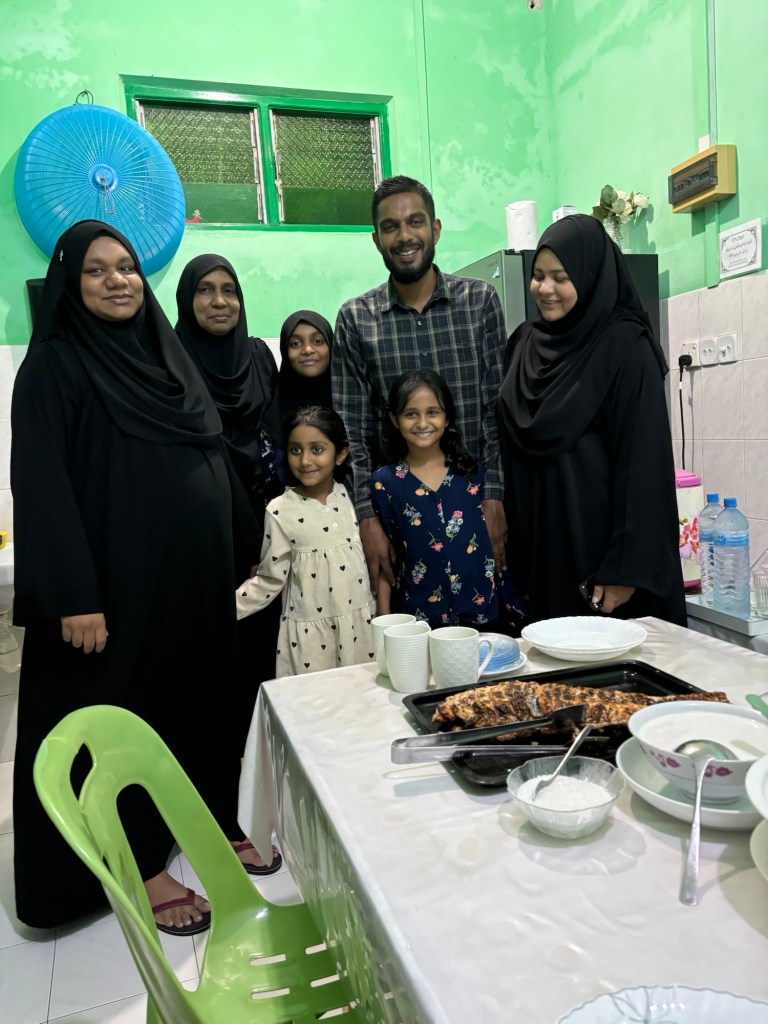
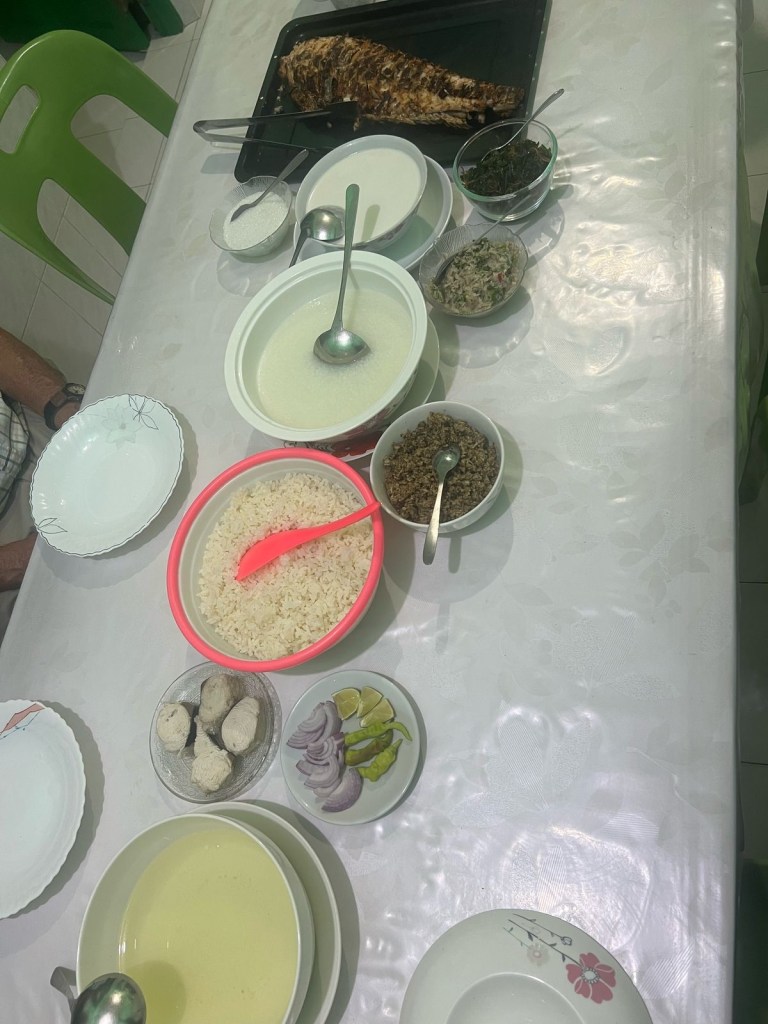
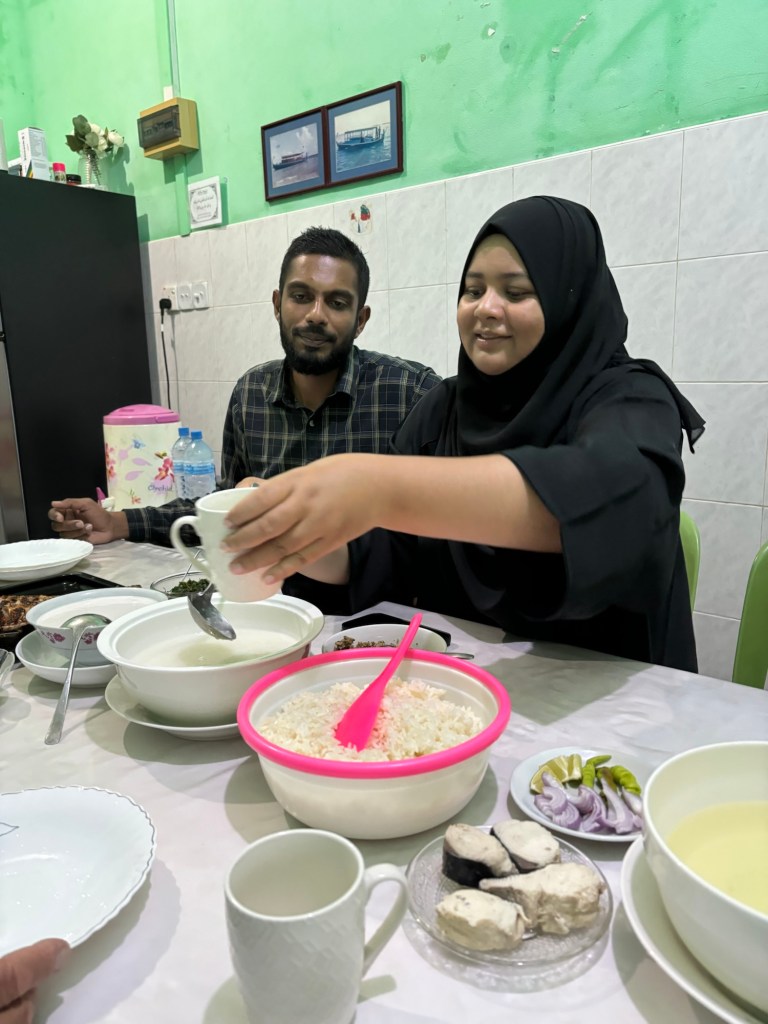
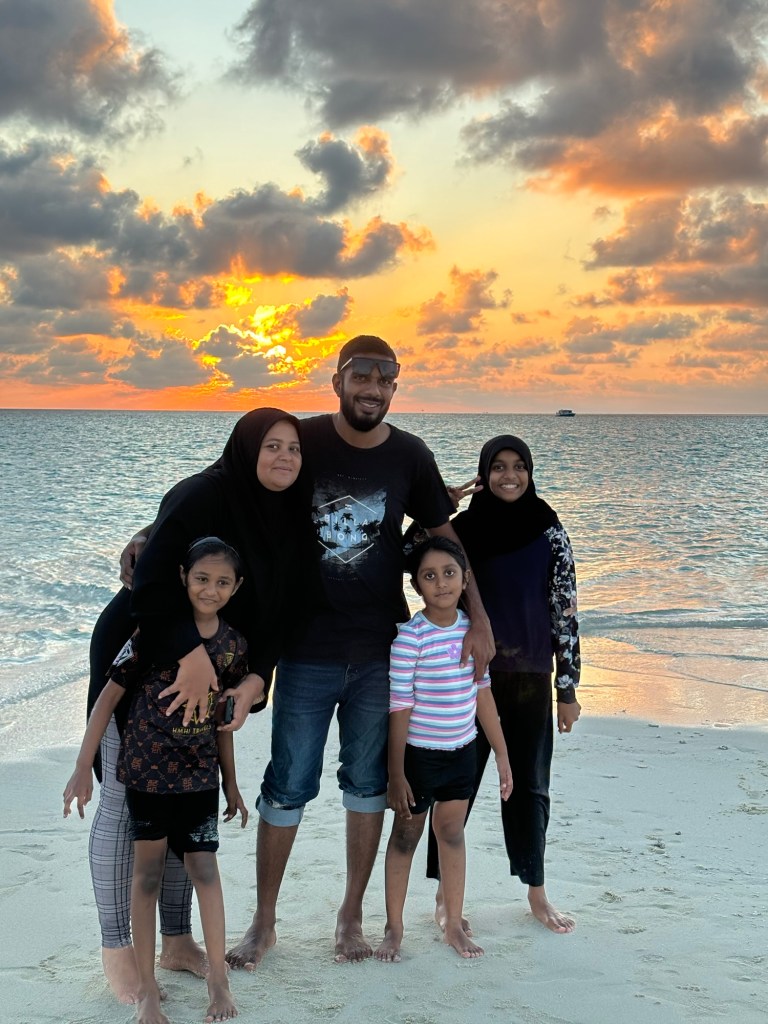
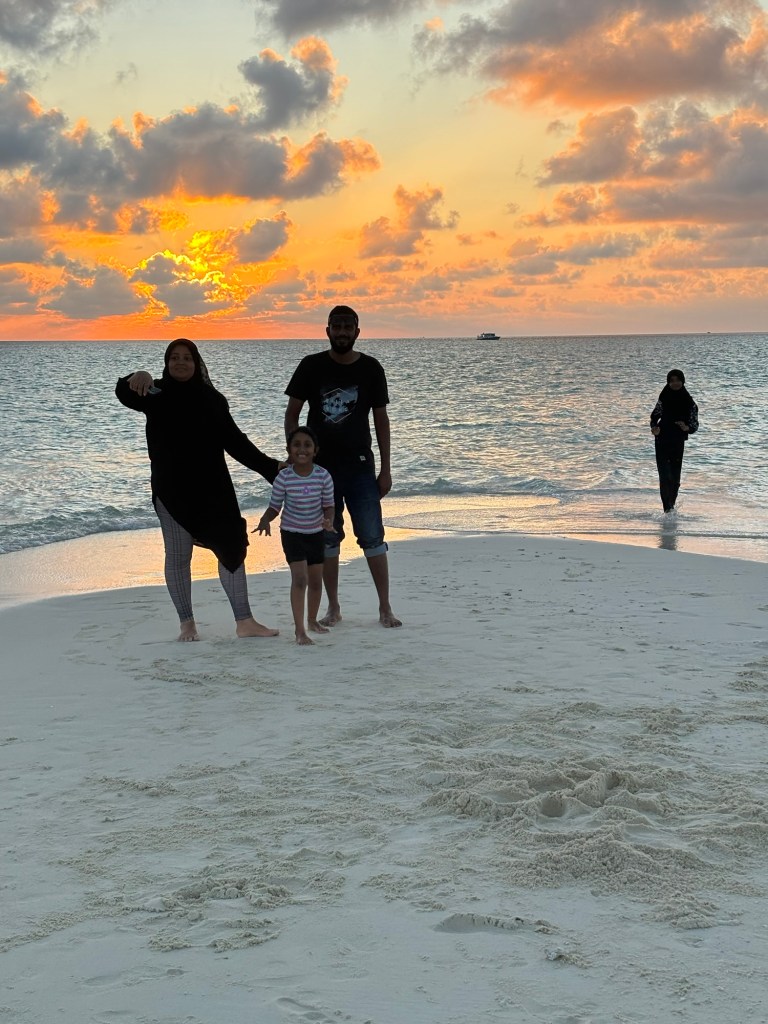
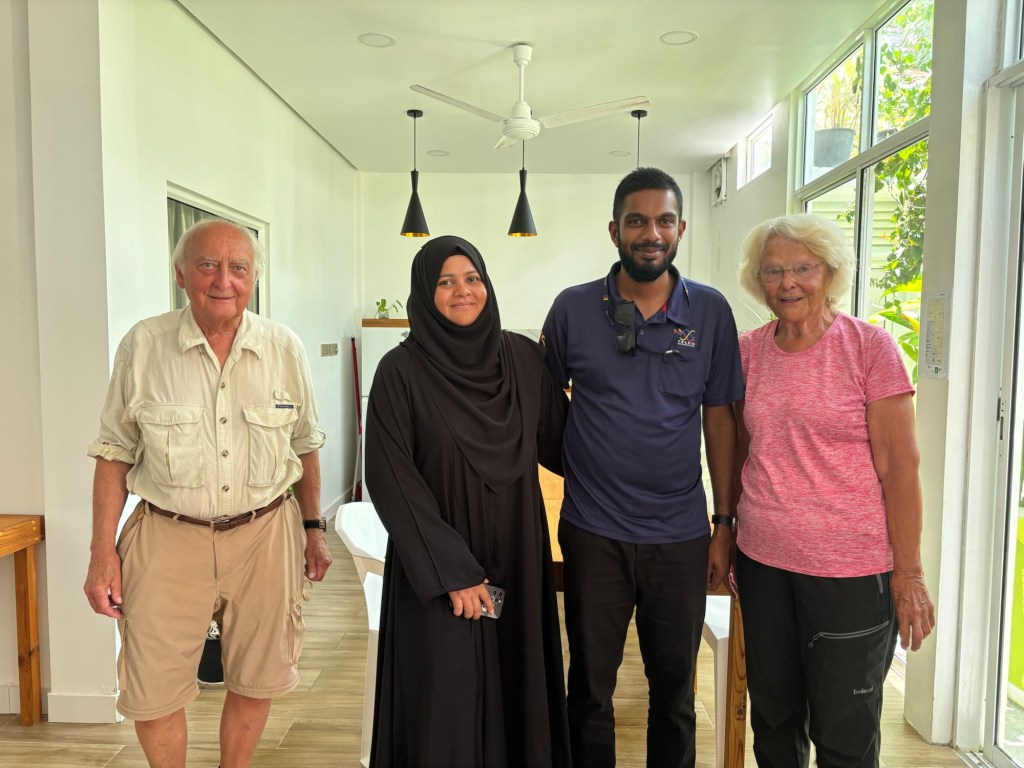
Mohamed and Hafeeza, the couple on the right, are who we met in Morocco. They gave us a glimpse of their life. We went to their home for a traditional dinner prepared by Mohamed’s mother. Hafeeza explained how each dish was prepared.
Freshly caught tuna surpasses any we have eaten in the US. Hafeeza explained how to eat each of the dishes.
Mohamed’s mother prepared the meal.
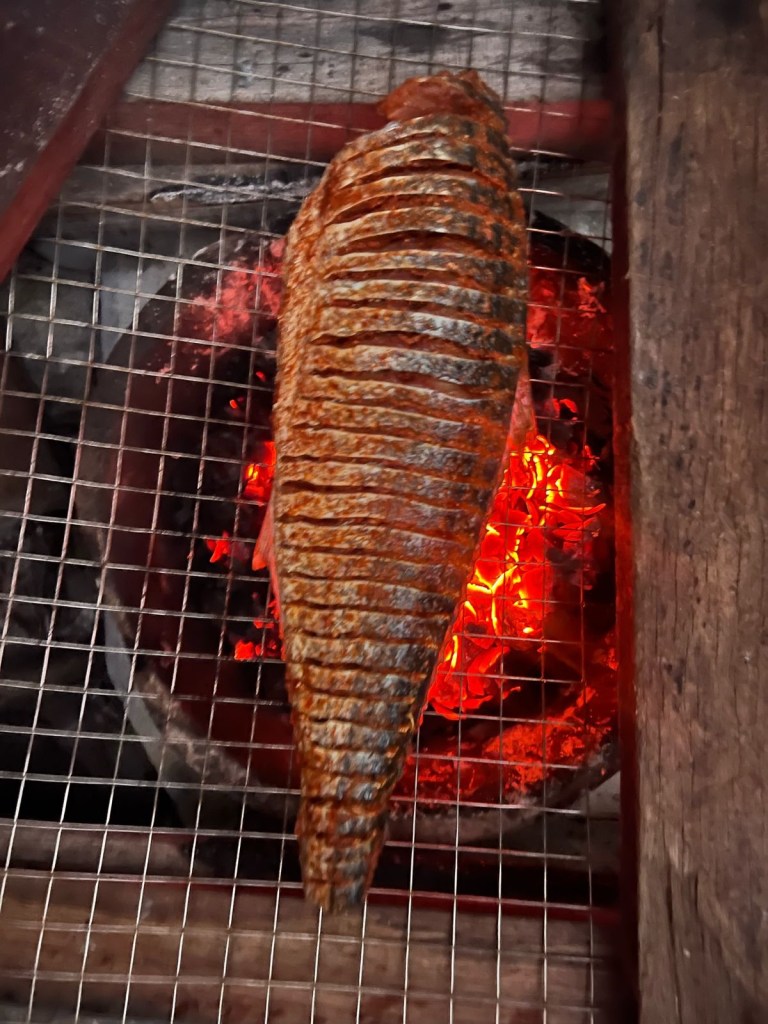
The main course caught that day . The fish was barbecued over burning coconut husks.
On the way to the sandbank
This is the sand bank picnic.
Snacks (?) on the sand bank. Hafeeza had spent the day preparing more traditional food for the occasion. We brought the peanut butter and crackers.

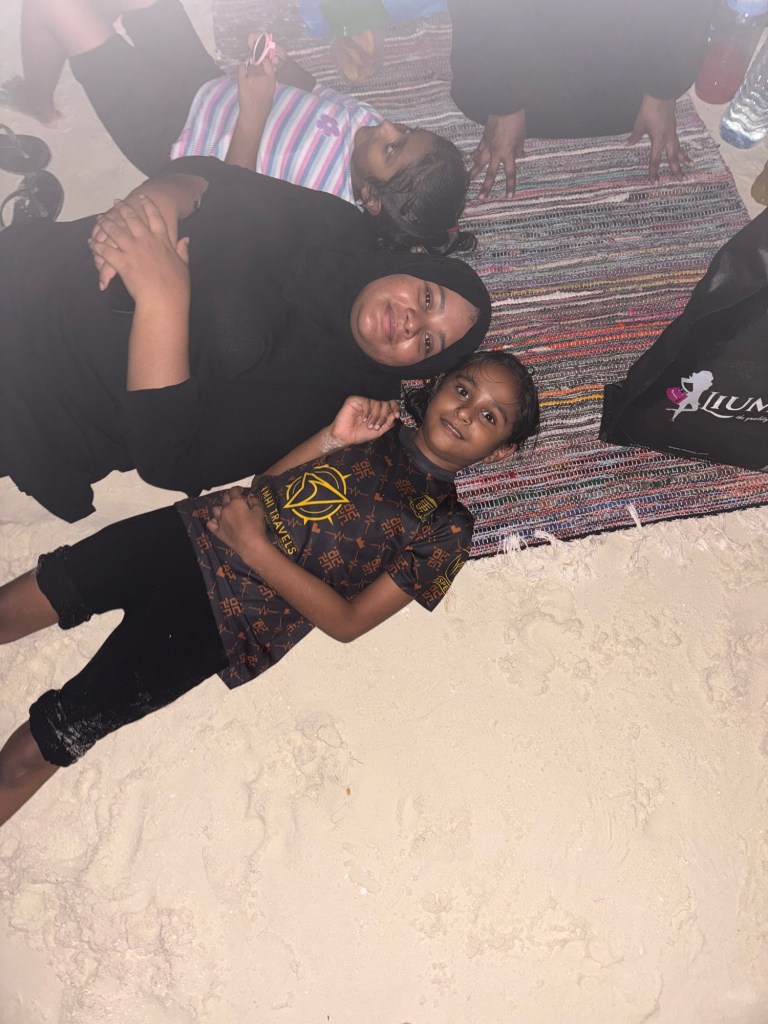
Hafeeza and two of her nieces lay on the sand bank to watch the stars.
She found a feather which we examined.
 For Louise and I this was more than a picnic. We tried to take in the expanse of the ocean, the precariousness of the sandbar, the sites, the smells, the breezes, the sounds of the water. It was hard to take it all in for me. It was meditative time. 
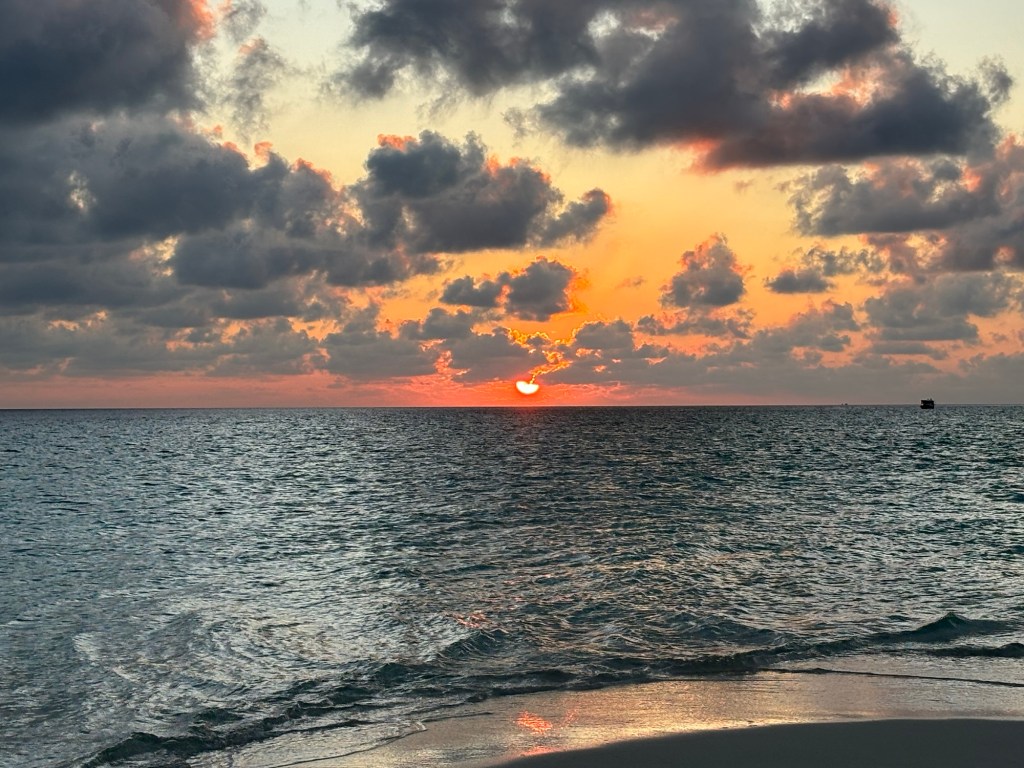
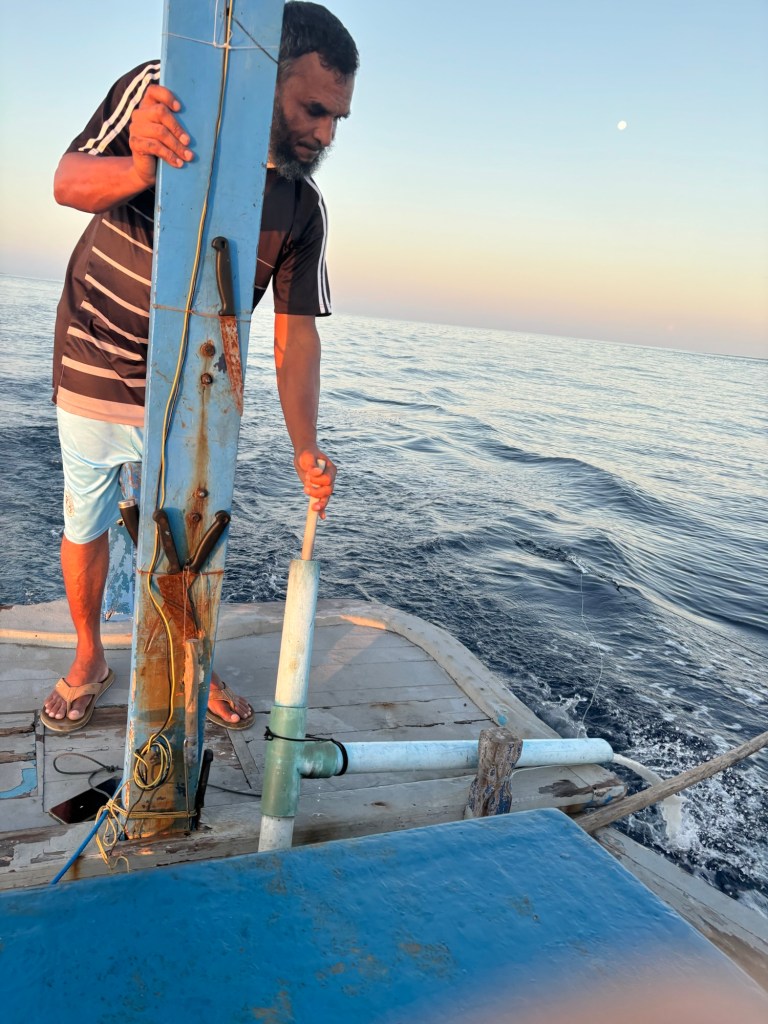
Sunrise on our last day in the Maldives found us on an old traditional fishing boat which was built by the fisherman’s grandfather.
Hand bilge pump
Tuna fishing without rod and reel
No tuna caught. Fishing is poor when the sea is calm.
Let there be peace on earth 

6 responses to “Transition day, air travel as a time machine ”

  1. I love this post. What an amazing experience.

    Like

  2. This post brought tears to my eyes. You are such amazing folks! Being open to opportunities is such good advice! Take care – Bobbie

    Like

  3. perfectiontotallyefc4f9ba8c Avatar
    perfectiontotallyefc4f9ba8c

    oh my goodness. ❤️ 💙 💜 I got a bit teary viewing this post too.

    Like

  4. Beautiful in so many ways. Thanks for sharing. ❤️

    Like

  5. Can’t say thank you enough for taking me along on your journeys! Loved all the travelogues.

    Like

Leave a reply to perfectiontotallyefc4f9ba8c Cancel reply