
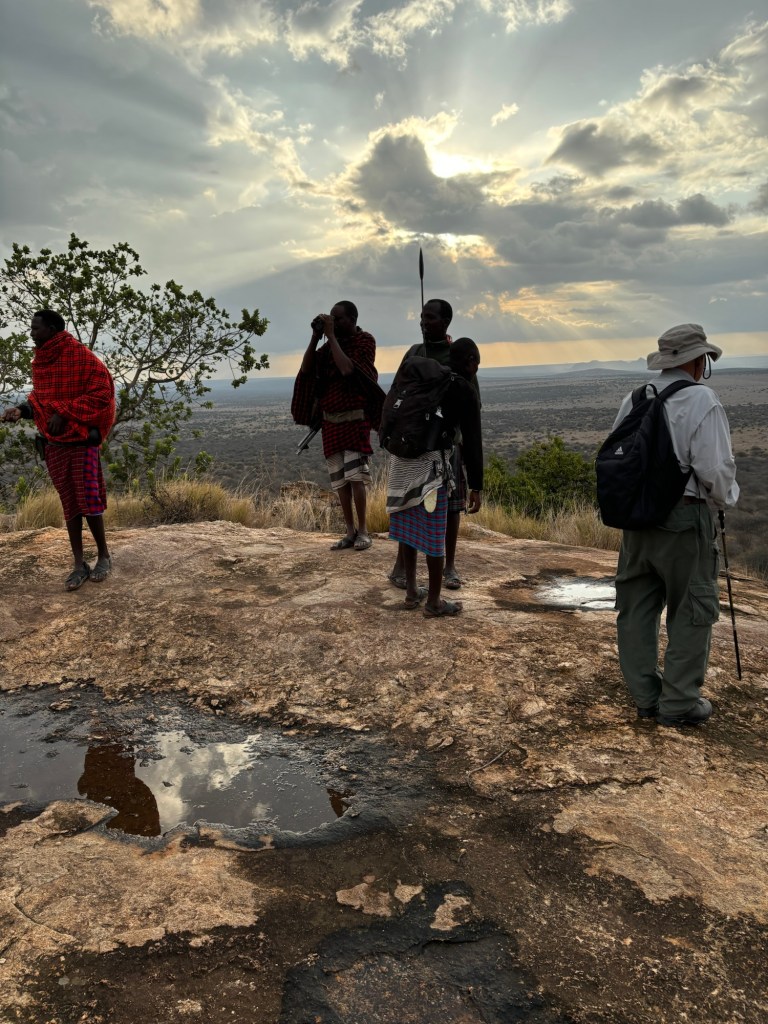
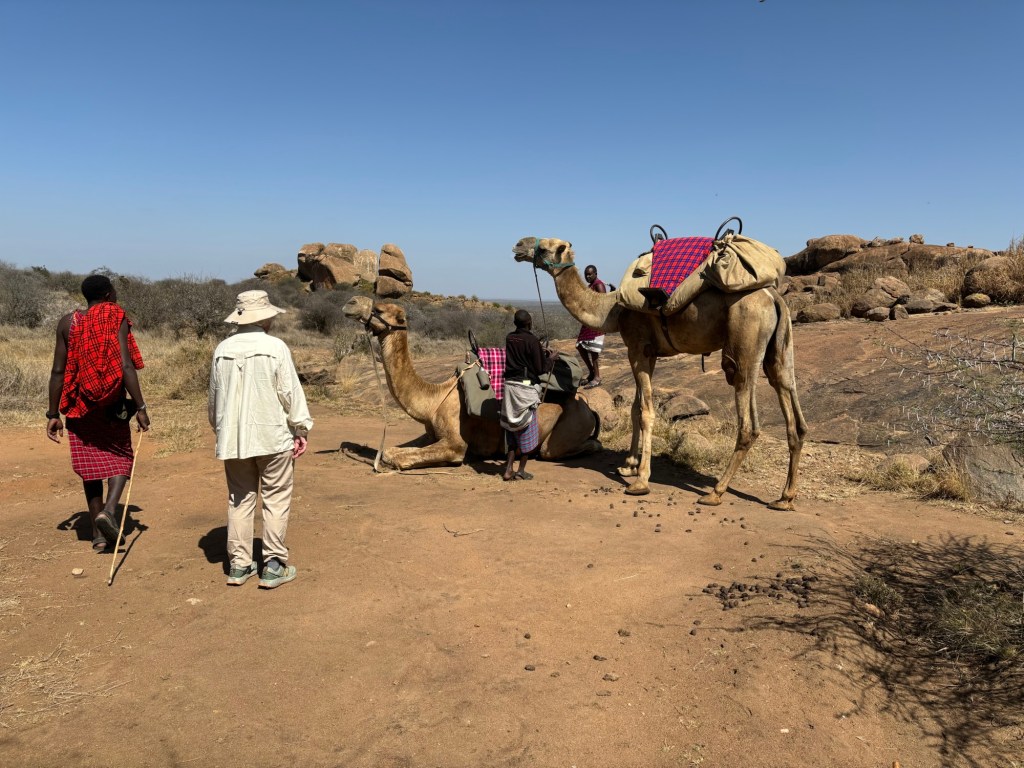
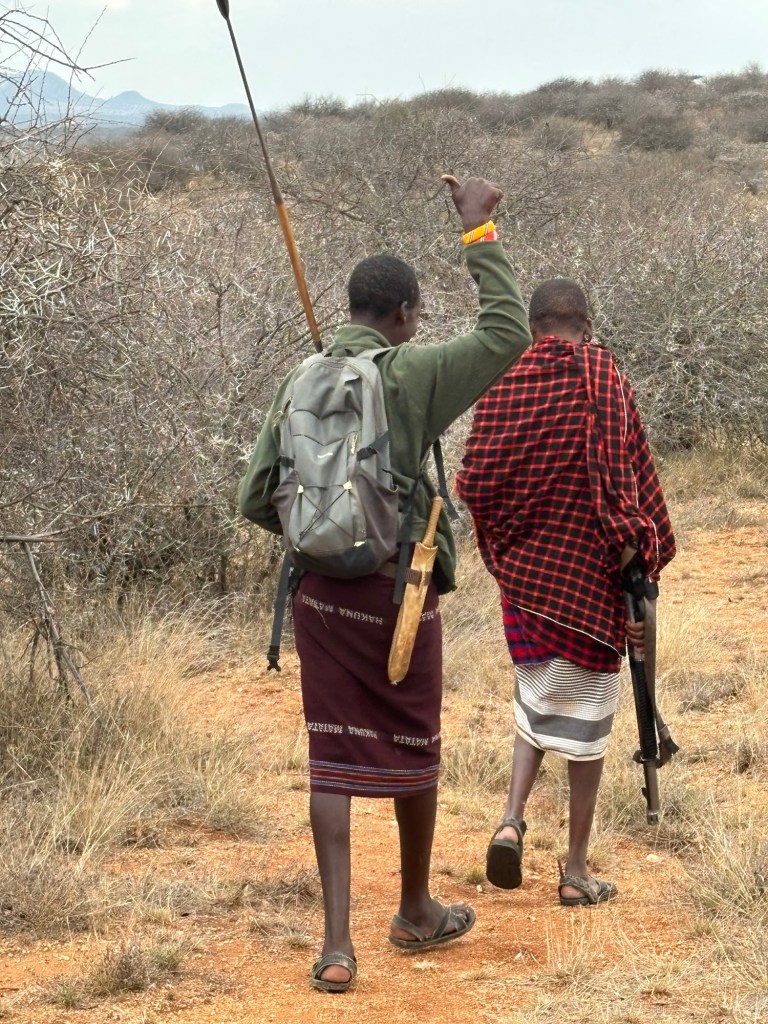
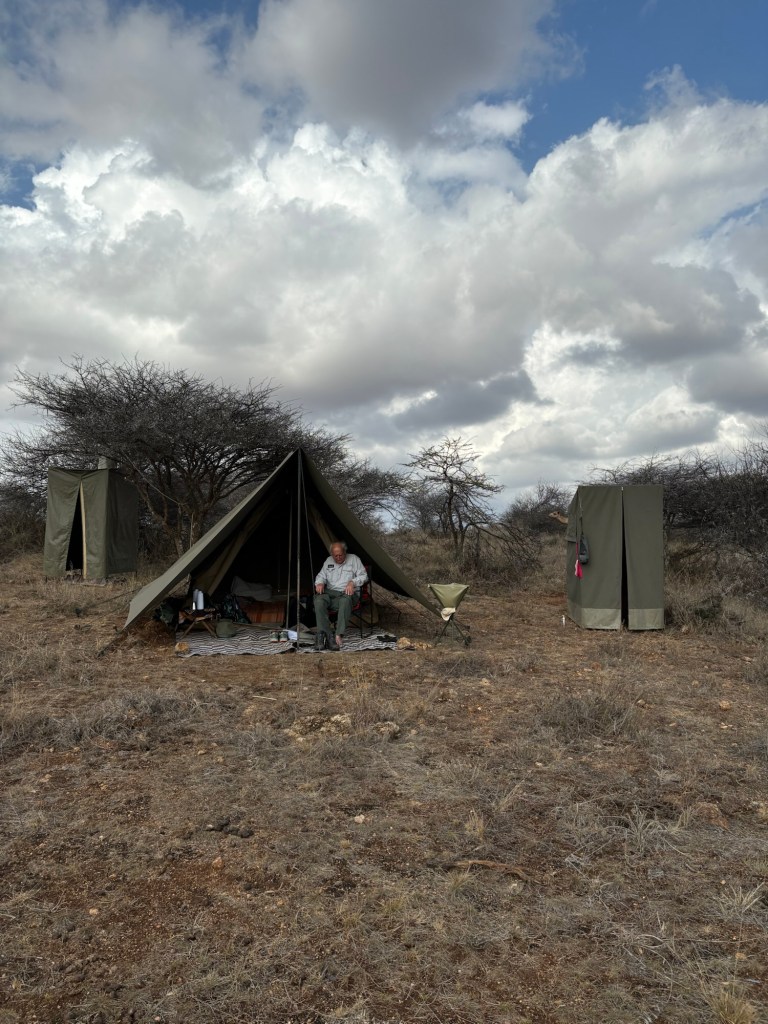
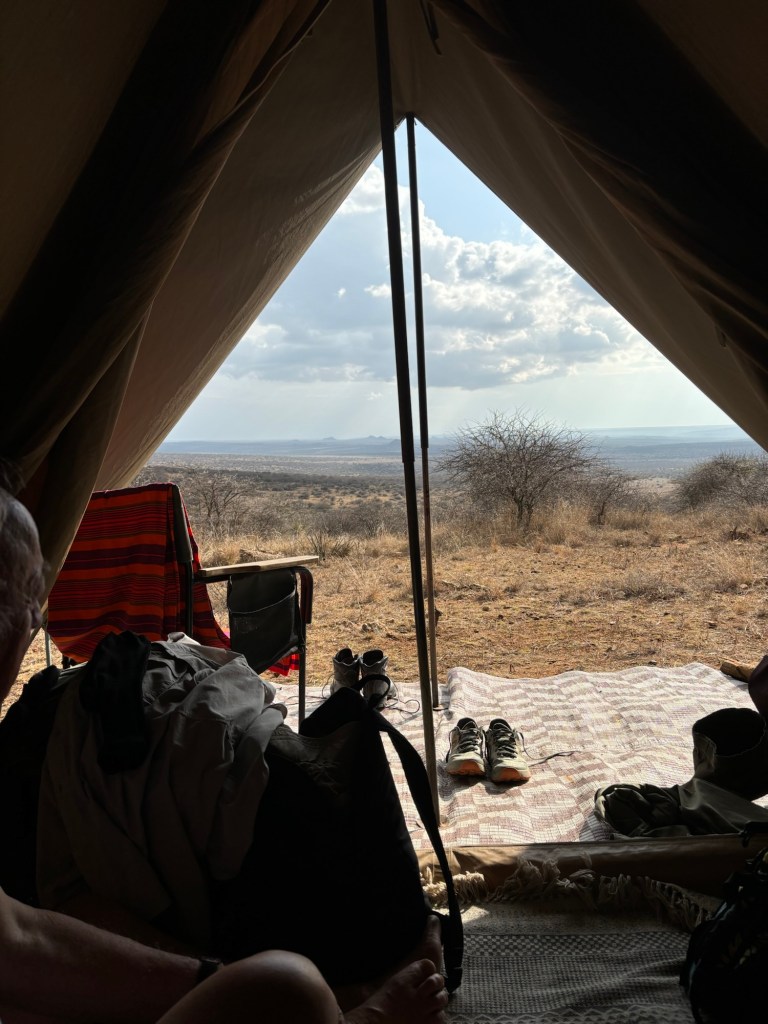
Our first exposure to Safari tourism in Kenya was a walking Safari with a movable primitive camp. We walked in the bush four hours in the morning and two hours in the evening each day. Our second exposure to Kenyan Safaris was in a conservation area owned by the Maasai tribe. In such an area, the inhabitants regulate their tourism. We experienced here morning and evening game drives from a stationary non-luxurious camp with locals providing all the services. We head tomorrow to Tanzania for a third type of experience. The camp will be more luxurious, and it will be in a national park with high visitation levels and Park restrictions.
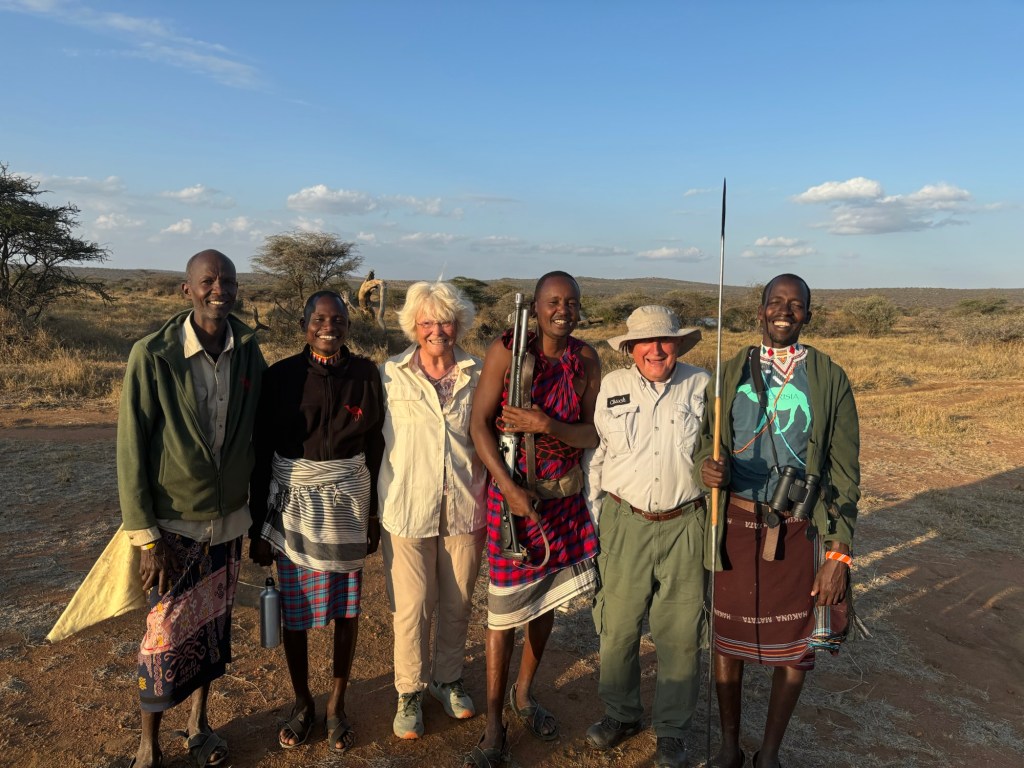
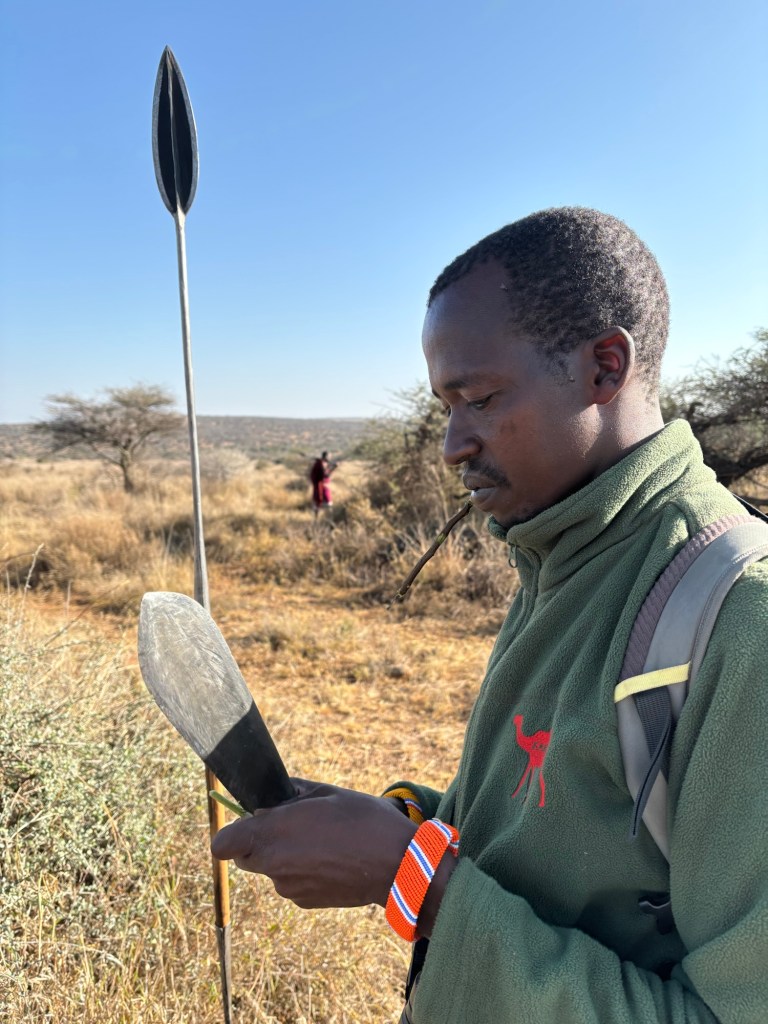
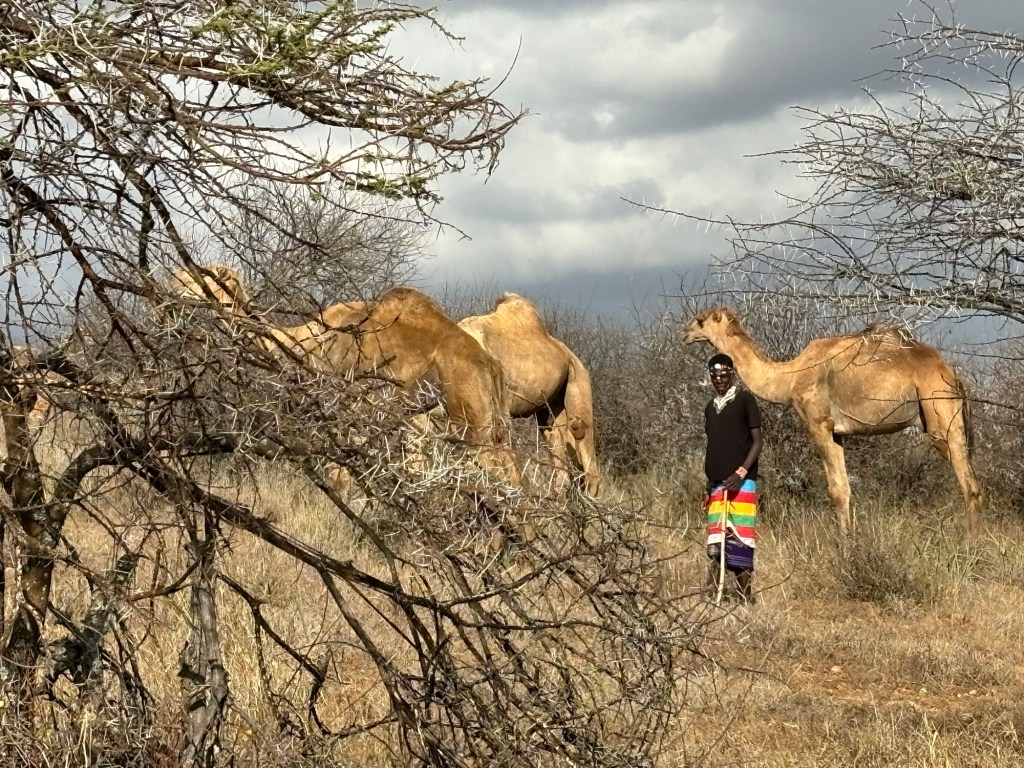
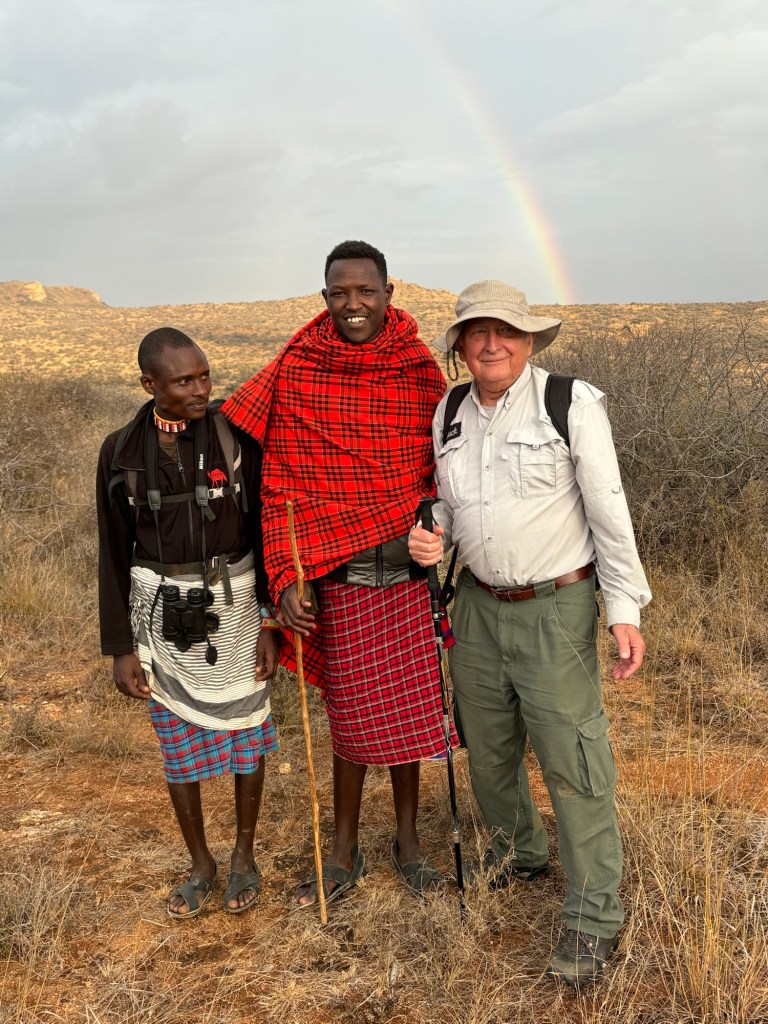
Unexpectedly, it has been the contact with Saburu and Massai people who provided the services which has had the greatest impact on us. The reason we had come to Kenya was to see the animals and land, but the reason we would return would not only be because of the animals, but because of the interaction with the people providing the services who were genuinely caring and open. We arrived vulnerable and wary and depart feeling loss. The genuine care received and open interaction with staff has been a “lovely” experience. Our guide Muli quoted the author of the book Out of Africa. He said we say “See you next time” , we don’t say goodbye.
Not that the animals and landscape hasn’t been too real to be taken in easily, we had to remind ourselves often where we really are. This hasn’t been a wildlife documentary. This is real we had to say. However, warthogs are officially now called pumba because of the movie Lion King. We saw close-up lions mating, a leopard eating viscera from its kill, and the birth of an Impala. The animals observed in their real natural state and using the same environment harmoniously and with ingenuity has been phenomenal. Both guides repeatedly explained this ingenuity of the animals we were observing, and they both used the same phrase saying of the animals, “They are very clever. “


 One Way Ticket
Leave a reply to Anonymous Cancel reply