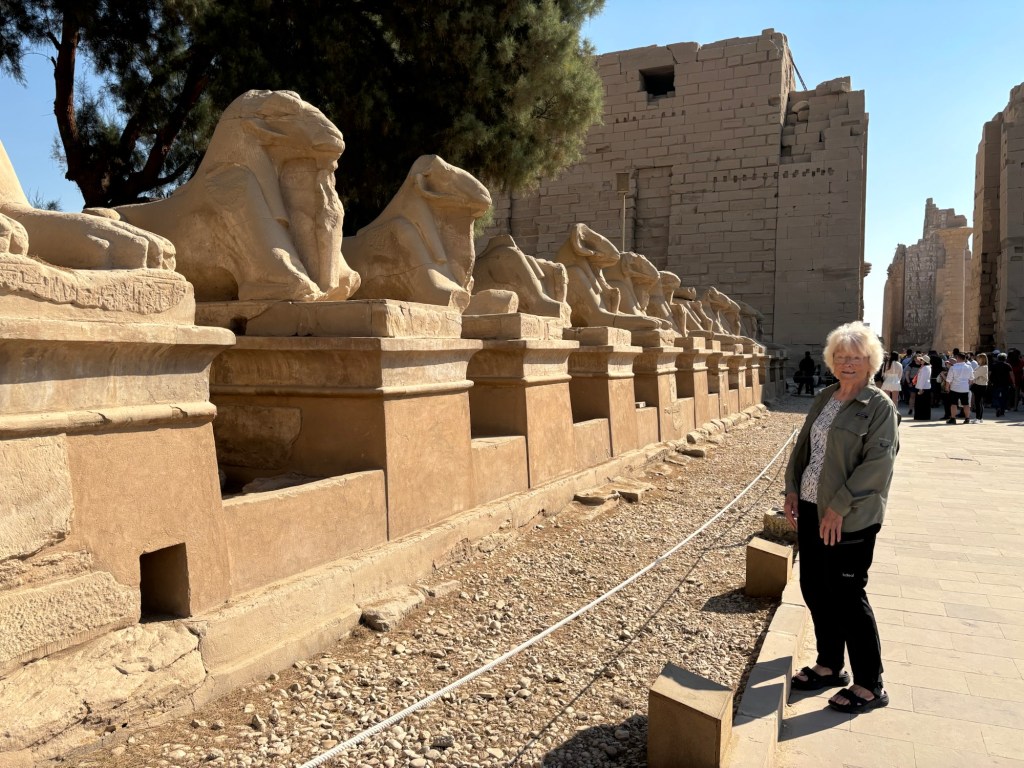
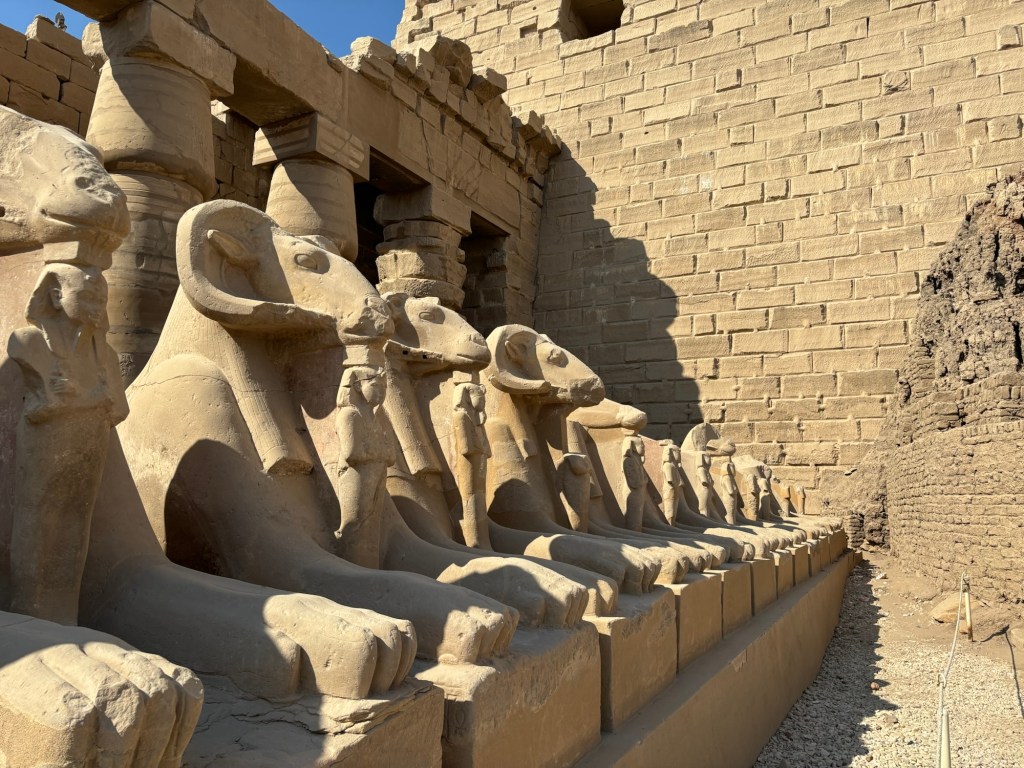
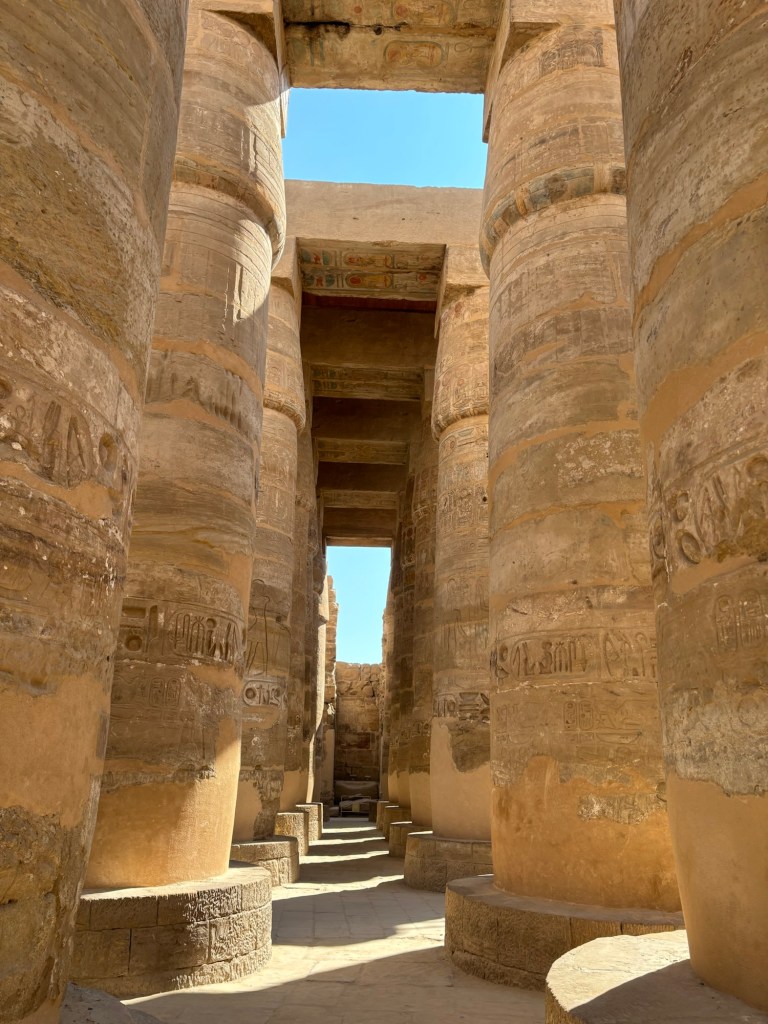
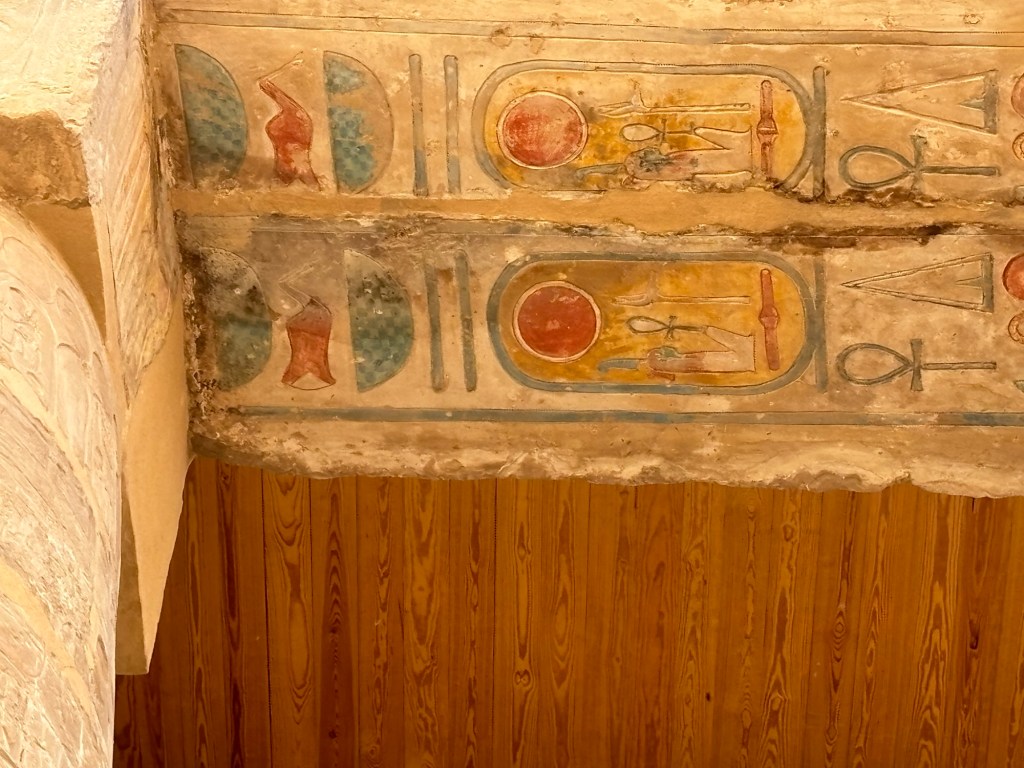
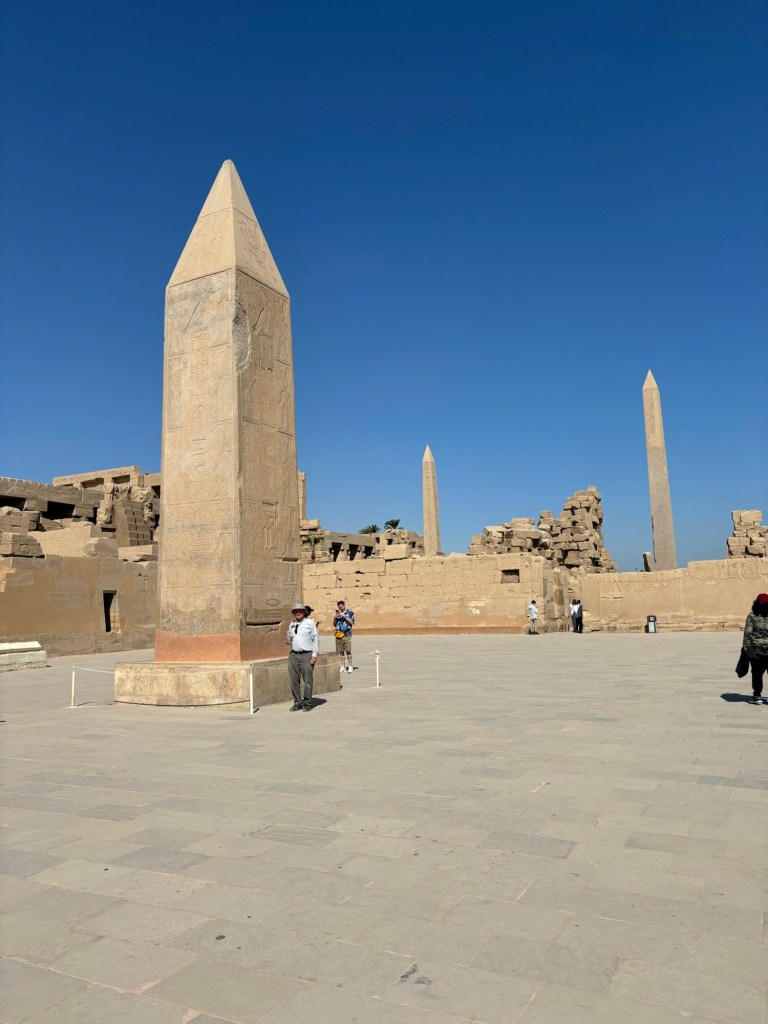
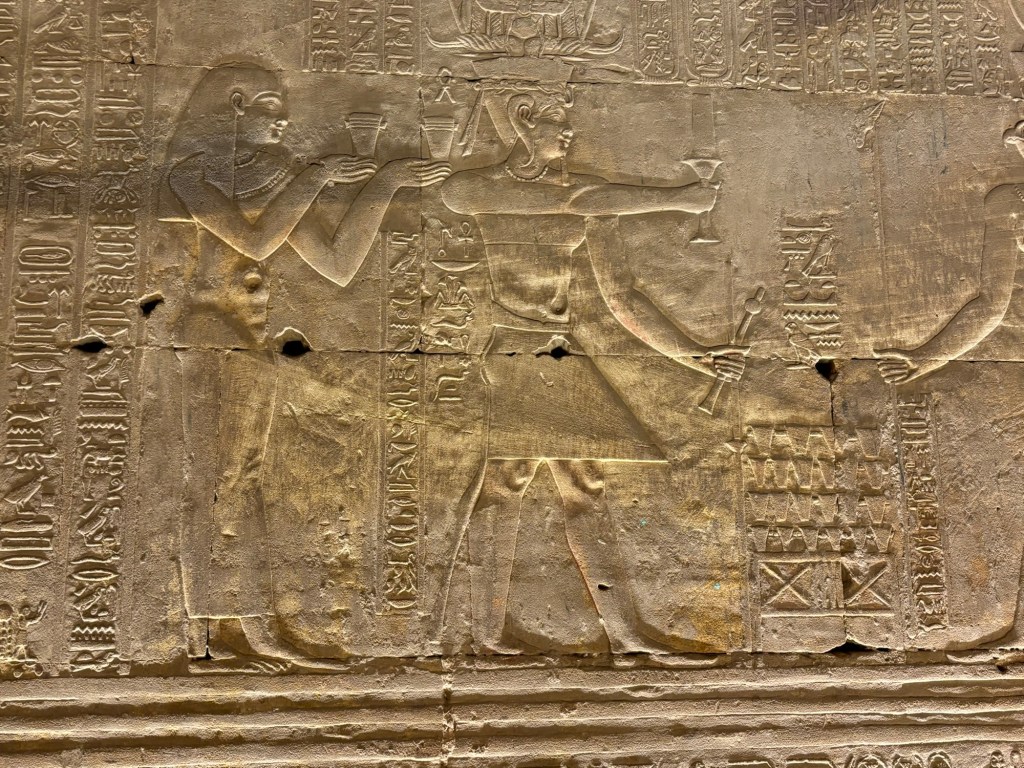
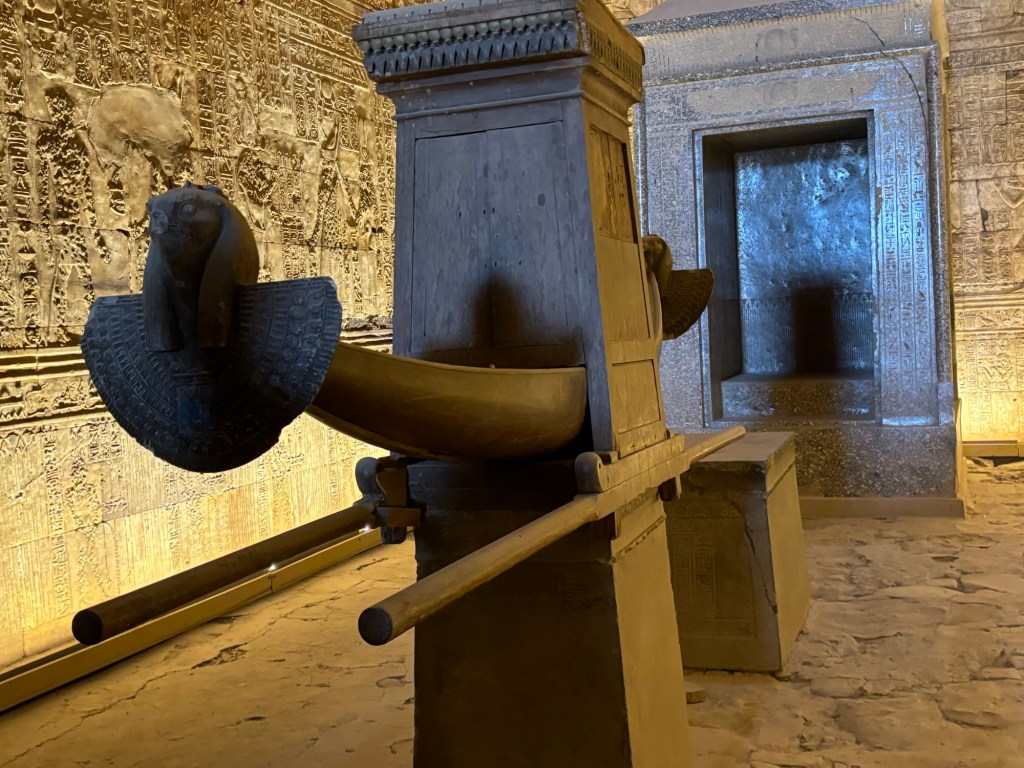
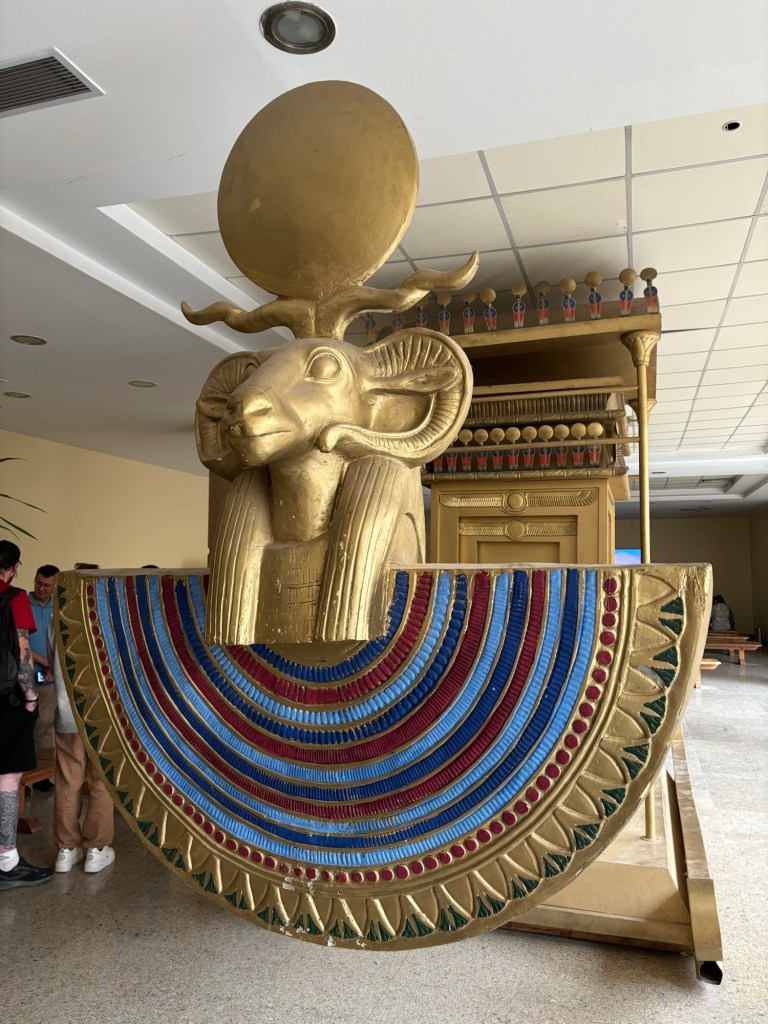
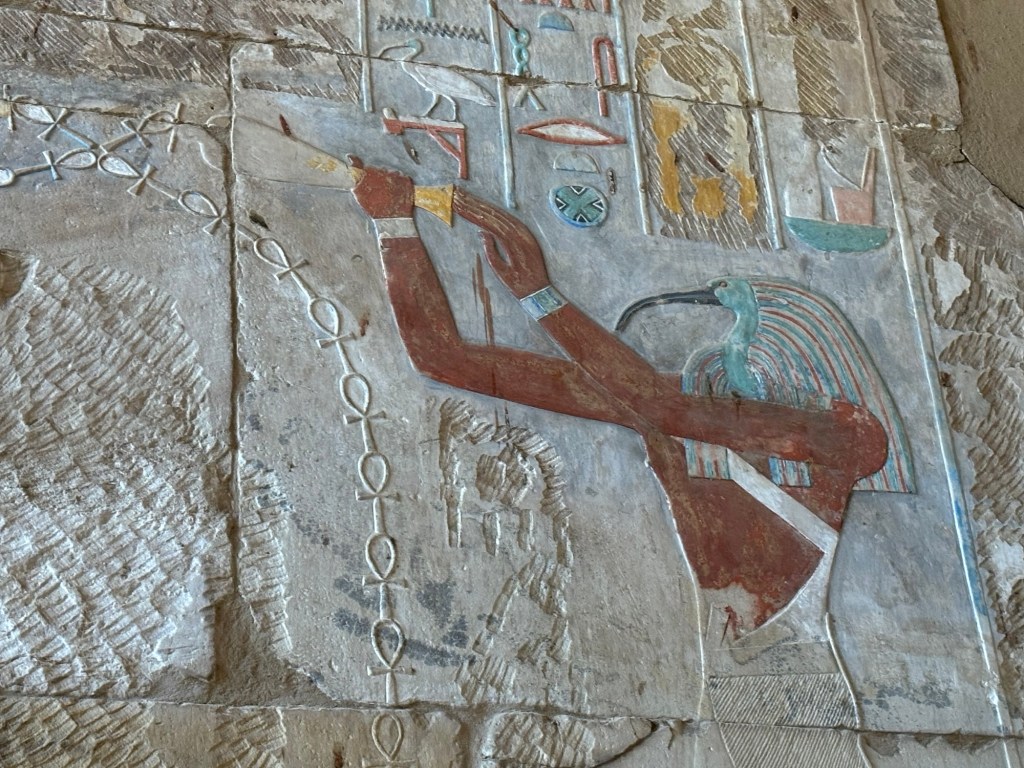
Sphinx Avenue which is 2-3 km long connects Karnak Temples with another temple in Luxor. This row of ram horned sphinxes lined the entrance to the Karnak temple. The size of each construction was built to impress. It continues to do so.The ceiling here shows the signature of a pharaoh Obelisk’s were built to connect with the gods. Their tops were sometimes covered with goldThis depicts making offerings to a god. These offerings were often essential oils, wine, fruit, meat or vegetables as depicted on the carvings.The moon boat was carried each year down Sphinx Avenue as part of the new year celebration after the Nile flooding.The front of one of the moon boats.Here we see one of the gods pouring water on one of the pharaohs to purify him. The flowing water is depicted by a chain of eternity symbols.
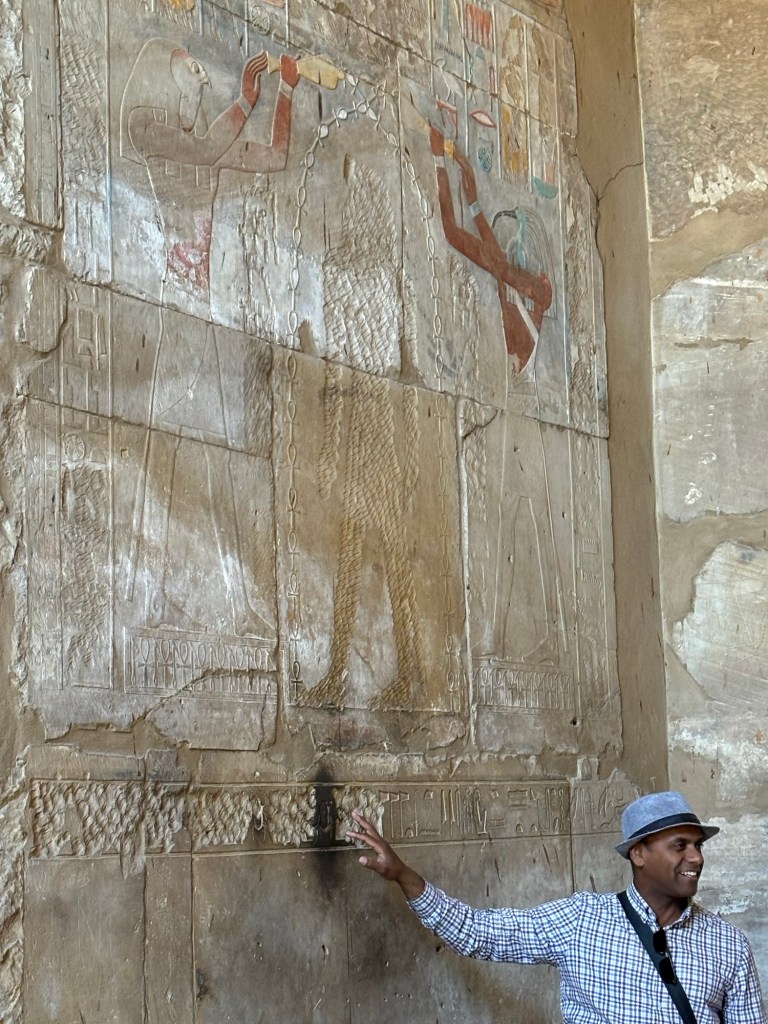
Here our guide, Heshram, explained a carving. We enjoyed his enthusiasm explaining what we are looking at.
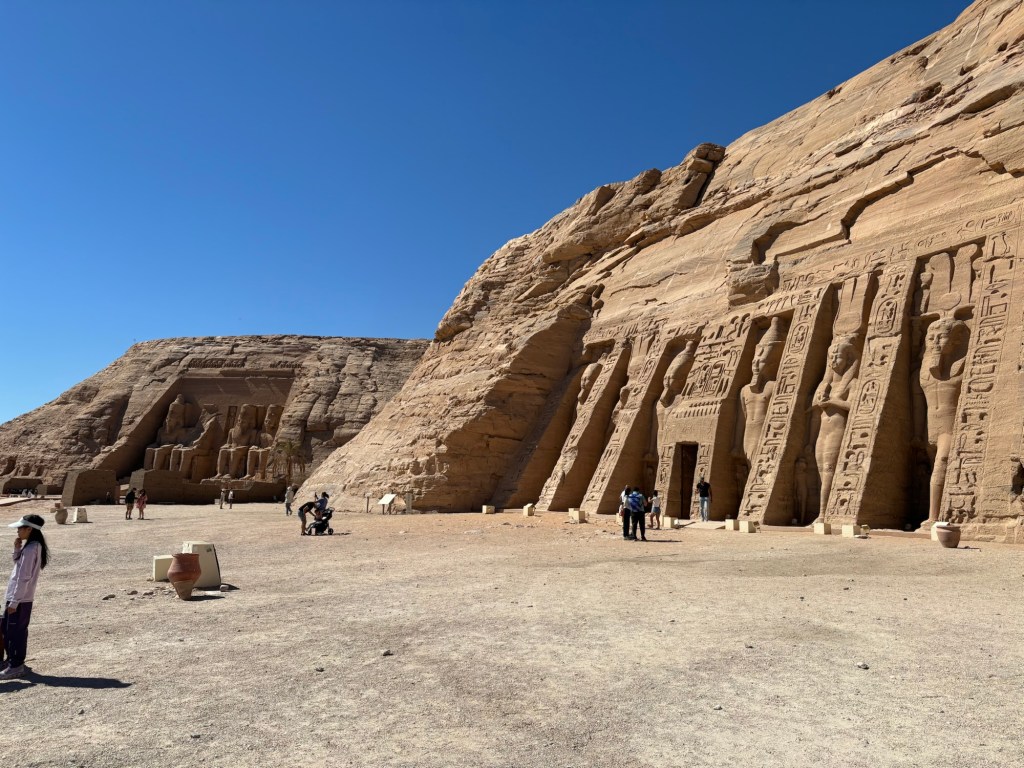
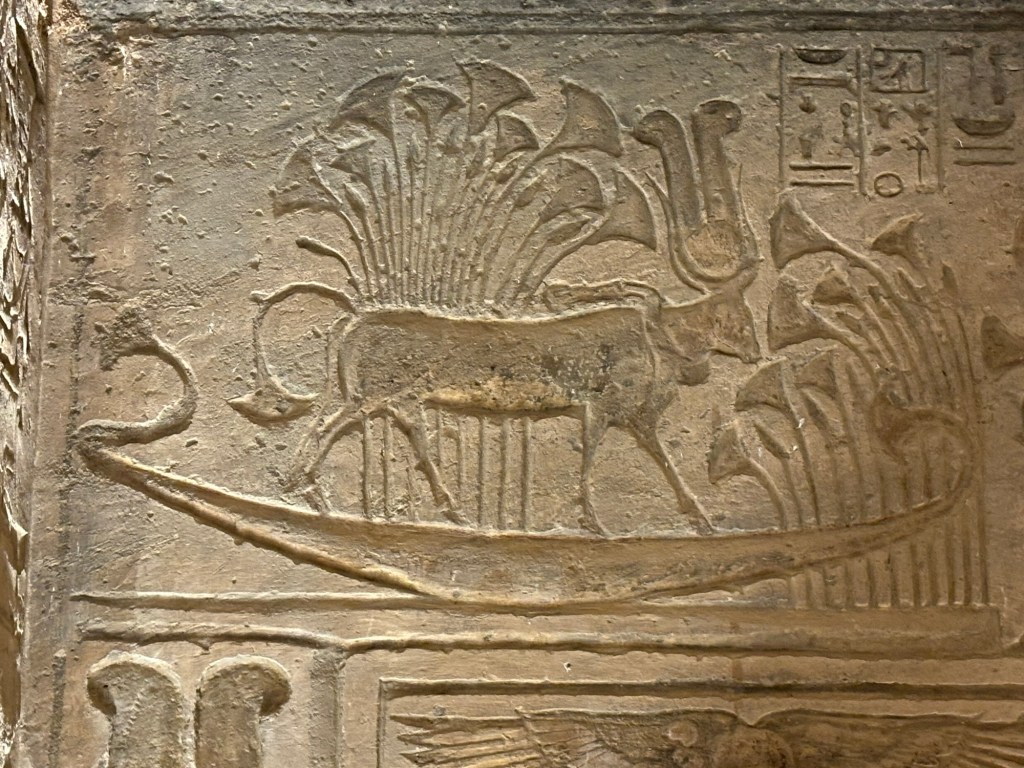
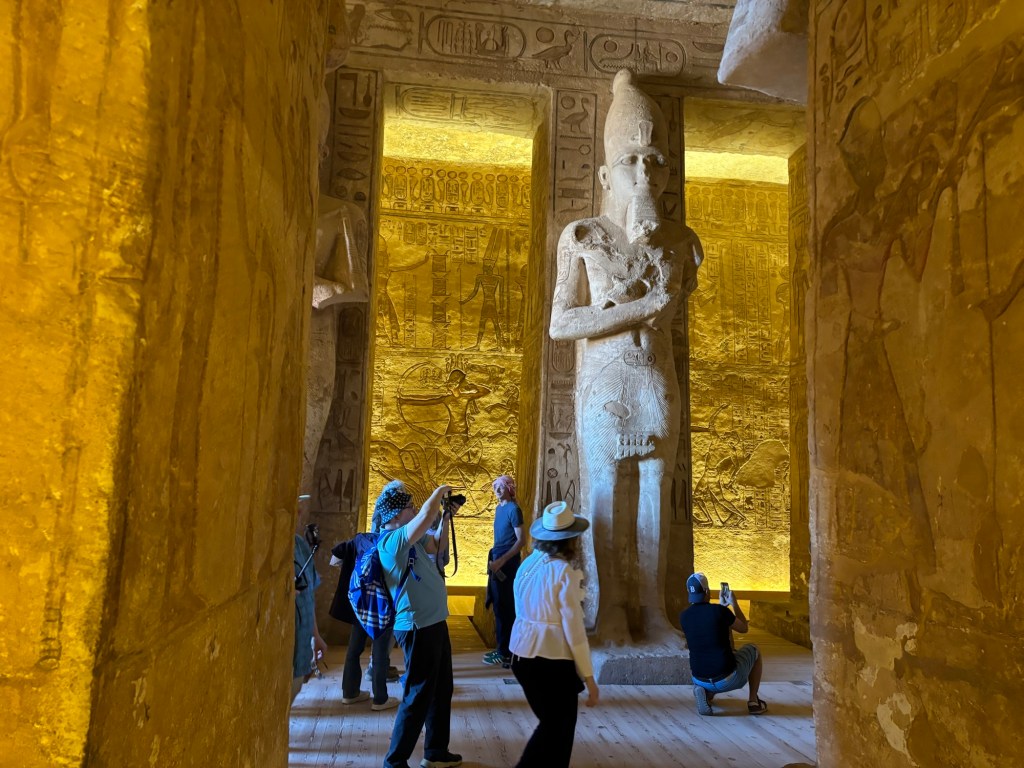
The two temples here both had to be moved during the building of the Aswan dam. The lake the dam produced would have completely submerged the temples. They were taken apart block by block and reassembled. Also this shows two temples built by Ramses II. One for himself and a smaller one for his wife. Building a temple for a wife was only done by one other pharaoh. In the boat is the goddess of music, motherhood, eternity and love
The last Egyptian temple was built by a Roman king who added the arch and a few more architectural modifications. Egypt also has been ruled by Greek kings since being conquered by Alexander the great. According to our guide, around 300 CE, the Roman emperor, Diocletian, outlawed the ancient religion of Egypt and because of that much of the wall art was deliberately damaged. Faces were chiseled, chipped and removed.
Visiting temples this past week we began to see the pattern and reason for their building. The walls and statues depicted the greatness of the pharaoh and his connection to the gods, both by his offerings to them, and then by their blessings bestowed upon him. These scenes are repeated over and over on the temple walls. Ramses II was the most prolific temple builder and also prolific in producing offspring. He did build a temple as a gift to his wife, which was very unusual. The temples are stylized and meant to impress with grandeur. They still have that effect today.
9 responses to “Bragging Rights, Temples of the Pharaohs”
Anonymous
Amazing!! A friend of mine went many years ago. She loved everything Cairo had to offer. It was hard for her to leave. That was back in the late 1980’s.


 One Way Ticket
Leave a reply to Anonymous Cancel reply